Marlinespike – Terminology
Published by Chris Riley in Nautical Knots Last updated on July 12, 2022
Confused when trying to learn new knots? We’ve put together some basic rope and knot terminology to help keep you from being confused the next time you try picking up a new style of knot.
|
Bitter end: |
the free end of a line
|
|
Standing part: |
the longer part of a line which is fixed during the tying of a knot
|
|
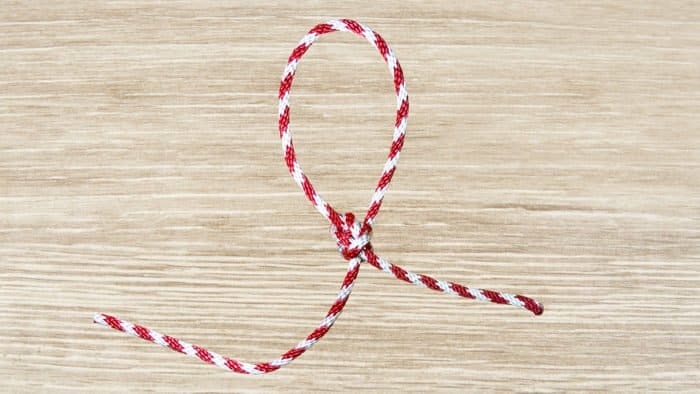
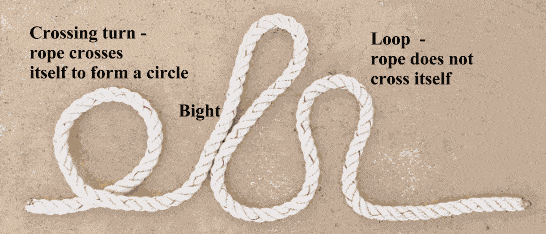
Bight: |
The part of the rope between the end and the standing part. A loop formed by folding the rope back on itself
|
|
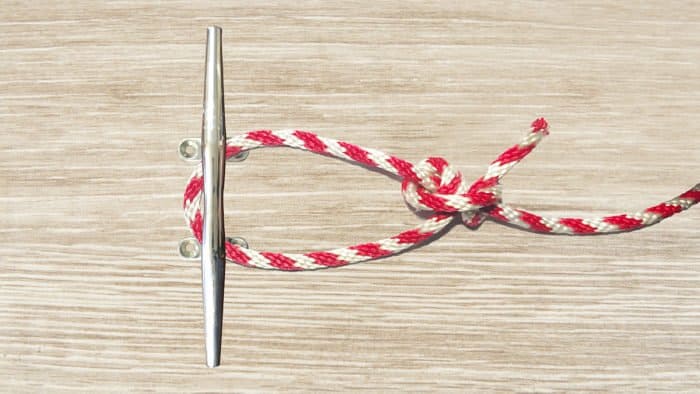
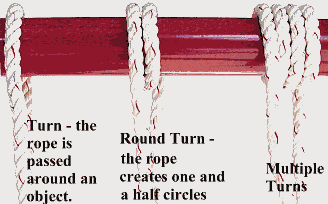
Turn: |
a loop formed around a post, rail, or the line itself
|
|
Crossing Turn: |
a circle of rope made by crossing the rope over itself
|
|
Loop: |
a circle of rope made by bringing two parts of the rope together without crossing them over each other
|
|
Splice: |
weaving strands of a line to itself or to a second piece of line
|
|
Whipping: |
wrapping twine or tape around line to line’s end to prevent unraveling
|
|
Seizing: |
wrapping twine or tape around two lines to bind two parts of line side by side
|
|
Worming: |
laying smaller line in the spiral grooves (with the lay) between line strands
|
|
Parcelling: |
winding strips of canvas over, and in the same direction as, worming
|
|
Serving: |
winding small line against the lay and over worming and parcelling to protect line from chafe and water damage
|
|
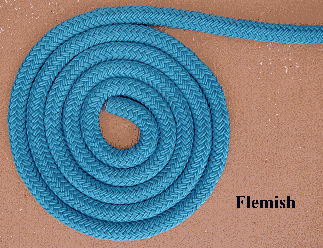
Flemish: |
to make a Flemish coil by taking the end of a line and laying it in a tight flat spiral on the deck. Used to “tidy” up and keep line neat
|
|
Faking: |
laying a line on deck in a series figure eights so the line will run free without tangling
|
|
Flaking: |
laying out line on deck in parallel rows. Don’t confuse with faking .
|
|
Short splice: |
the strongest way to connect two lines. This splice has 6 strands in the cross section and is thick and may not run through a block
|
|
Long splice: |
the strand of one line replaces the strand of the other line. The size of line is kept the same however, and it is weaker than the short splice
|
|
Eye splice: |
stronger than any knot in forming a loop in a line
|
|
Thimble: |
a metal or plastic form inserted in the eye splice to prevent chafe
|
|
Back splice: |
splicing a line back on itself to prevent unraveling – it like the short splice has a cross section of 6 strands and may not be able to be pulled through a block
|
|
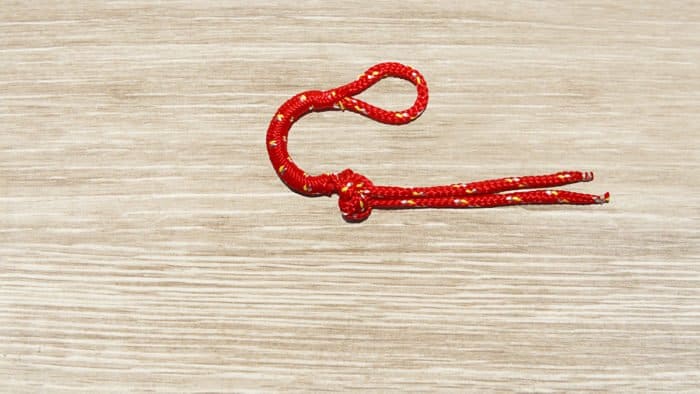
Eye: |
A loop made in the end of a rope either by knotting, seizing or splicing.
|
|
Coil: |
Rope made into a neat series of loops or circles, usually for storing.
|

Worming, parcelling and serving are words left over from the old days when most line was made of manila. However, you may see these words used in the USCG exam. The purpose is to prevent chaffing of the line and keep water out to control rot. Remember this rule: Worm and parcel with the lay; turn and serve the other way.

Categories: Nautical Knots