The Basics of Boating Etiquette
Published by Ian Fortey in Boats Last updated on January 2, 2024
Boating etiquette has been developed over hundreds of years. Some rules are actual rules, set in stone, that need to be followed. Ignoring these can have legal or financial repercussions. But a few rules are unwritten. These are courtesies that boaters extend to one another. Boat sets of rules work together to make boating a better experience for everyone on the water. These apply to fishing boats, canoes, and yachts alike.
Tips for a Passing Boat AKA Rules of the Road
There are more to the Rules of the Road than just “leave plenty of room” between you and the other vessel. You need to respect the distance between you and that boat. You need to watch your wake, depth conditions, and limited space. Be mindful of your speed and the speed of the other boat. Consider the effect on smaller boats and their passengers.
When it comes to passing other watercraft, direction is important. Do you pass to the port side or the starboard side? There is a right way and a wrong way. Some boaters think if there is no risk of collision then they are free to go underway however they wish. Not so.
Your boat and your wake are your responsibility. Even if your boat doesn’t cause damage, you can be held legally responsible if your wake does. The waves created by your wake could potentially knock a person overboard.

- You should always give as much room as possible when overtaking a vessel. The depth conditions will determine just how much room you can give.
- The stand on vessel is the one that has the right of way. The give way vessel should accommodate the stand on vessel.
- You should slow your speed to reduce your wake. A slower boat will get rocked by a faster boat’s wake. This can be very disruptive.
- If a boat is stationary, be considerate. Give it a wide berth. Reduce speed so you don’t swamp it. Stationary boats are usually being used for fishing, swimming, etc.
- If you are being overtaken, it’s also a good idea to reduce speed. Slowing your own speed ensures the boat that intends to pass will not produce an even bigger wake. If you are proceeding at 8 knots, try slowing to 4. That way, the passing boat only needs to pass at 6 rather than 10.
- If you are being overtaken, remain on course. Retain speed or, if needed, slow down. You have as much responsibility to avoid a collision as the other boat.
- If you are going by a boat head on, both vessels should turn to starboard and pass port to port. If this is not possible, then you need to signal the other boaters, or vice versa.
- A sailboat under sail will always have the right of way over a powerboat.
- Human powered boats, like kayaks, have the right of way over any vessel. This includes sailboats.
- If another boat has restricted maneuverability, it is the stand on vessel. That means you need to accommodate it. This could be due to the size of the other vessel, or what it’s doing. No matter what, you must always try to avoid accidents. That rule takes precedence over all others.
Tips for Anchoring/Mooring Your Boat
- Never drop anchor in a channel. Think of a channel like the highway. If you drop anchor, you’re parking on the highway. Channels are marked by red and green buoys.
- Head into an anchorage or mooring at a low speed.
- Never get too close to other anchored vessels. If the wind or currents change, your anchor lines can become tangled. This could cause a real problem.
- The first person at an anchorage determines swing radius. They set the bar for other boaters.
- Pay attention to the wind. You want to be downwind if you’re having a party, listening to music, or cooking food. It’s just considerate to others moored in the same common use area.
- Using oars if you are heading to shore at night in the dinghy instead of the outboard. Sound carries over water. New boaters often forget this.
Ask for permission before taking up a guest mooring. It may be reserved for someone on the way.
Tips for Being Around Other Boats in the Marina & Fuel Dock Tips
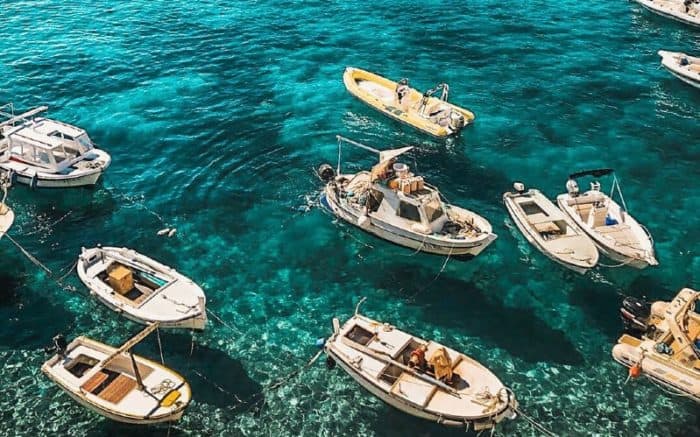
- Fueling up at the fuel dock offers limited time and space. Remember that other boats may be waiting to get into the spot you’re in. Fuel up quickly and then move on. Don’t stop to socialize or even head out to run errands. You’re expected to get other items or hang out with friends on your own time.
- If you’re at a boat launch or ramp, make sure you follow the same procedure. Be quick but safe to allow others to move their boats. No need to clean or drain the boat on the ramp. Get the tow vehicle to move your vessel in or out quickly.
- Offer a hand to others in the marina if you see them in need. There isn’t always a dockmaster handy. If someone is docking or undocking, offer to grab a line.
- Always respect the speed limit in the marina.
- If someone offers to assist you and you don’t need it, politely decline. If you do accept, make sure you offer a word of thanks.
- Keep your space clean. Stow ropes and other gear safely and neatly. No one likes a messy slip. It looks bad and can be dangerous.
Tips for Passengers on Boats

- If you’re the captain, let any guests know your rules before launch. Alert them ahead of time so they can be prepared for their stay,
- Make sure everyone knows what duties they may have to perform. Also where life jackets are and how to use them.
- Make sure everyone knows safety procedures. At least one other passenger should be able to take over for the captain in the event of an emergency. That includes operating the VHF radio.
- Explain rules of behavior. That means if no one can smoke or drink on your boat, establish that before you leave.
- Give a walkthrough of space and facilities. Explain the head if need be, and water/power conservation needs.
- Make sure everyone has the minimum clothing appropriate for the trip. That means warm weather gear or cold, things like sunscreen or hats. Non-skid deck shoes are important as well. Make sure they know space limitations so they only pack what is needed.
- Inform guests of whatever documents they need if you’re going to a foreign port.
Other Boaters Aren’t Always Right
Sadly, some boaters don’t follow the obvious rules. You need to respect others and the environment at all times. Don’t throw trash in the water. Don’t make excessive noise, especially later in the night. Learn to ask for help when necessary. It’s better to be humble in a sticky situation than to make it worse by trying to go it alone. Don’t do things you know are wrong just because you see another boater doing it.
Stay safe, be respectful, and have fun.

Categories: Boats, nauticalknowhow








1 Comment
Alice Carroll on February 26, 2020
My uncle told me that I should prepare to go fishing with him the next time I visit him in March. It will be my first time so I’m trying to learn about how I should act when inside a boat in the middle of the lake. It’s interesting when you mentioned that I should only bring the minimum amount of clothing appropriate for the climate because I heard being on a boat is generally windy and can be pretty cold even at noon.