Boat Navigation Rules
Published by Ian Fortey in nauticalknowhow Last updated on March 15, 2021
The rules of boat navigation are critical for ensuring safe boating. Part of being a responsible boat owner is knowing the rules of the road. That term, rules of the road refers to the Collision Avoidance Regulations or COLREGS.
The rules of the road are just what they sound like. They word just as the rules of the road on land dictate the safest way to drive. They provide a standard that all boaters can follow. The ultimate goal is to get where you’re going and avoid a collision.
Obviously any time someone presents you with rules it can be intimidating. That goes for rules of navigation to rules of the road and beyond. There’s a fear you’ll miss or forget something.
All you can do is your best. Learn these rules of navigation and put them in practice on the water. Be a responsible boat operator and do your best.
What are the Rules of Navigation?

The rules of navigation cover a range of topics. Anything you need to know about safely navigating a boat is covered here. You can get your own cost of the rules of the road from the U.S. Government Printing Office. They start with some simple definitions you need to be familiar with. Here are some of the more important ones.
Vessel: Most people use vessel to refer to any boat. The technical definition of a vessel is any craft capable of being used on the water. A vessel does not need to meet and requirements beyond that.
Power Driven Vessel: The same as above but in this case the vessel has a motor. Any vessel propelled by powered machinery.
Sailing Vessel: This is any vessel that does not use machine propulsion. Instead, it is a vessel that uses sails alone. A sailboat that has a motor is still a power-driven vessel.
Right of Way: This means your vessel has the right and duty to maintain course and speed.
Stand-On Vessel: This is the vessel that has the right of way.
Give Way Vessel: This is the vessel that should keep clear of the stand on vessel.
There is much more to the rules than definitions, of course. Avoiding collision risk is a major part. As are the safety and actions you need to maneuver around other boats. Safe speed and proper pecking order for right of way. Let’s take a look at some of the important features of the rules of the road.
Inland Rules vs International Rules
There are two sets of rules depending on where your boat is located. Charts can show you the demarcation line between inland waters and international waters. Most recreational boating is done in inland waters. For that reason, the rules we present in here will be inland as well.
The difference between the two can be significant. Sound signals, for instance, are very different from inland to international. If you’re not familiar with both, it can be confusing and potentially dangerous.
How to Avoid a Collision
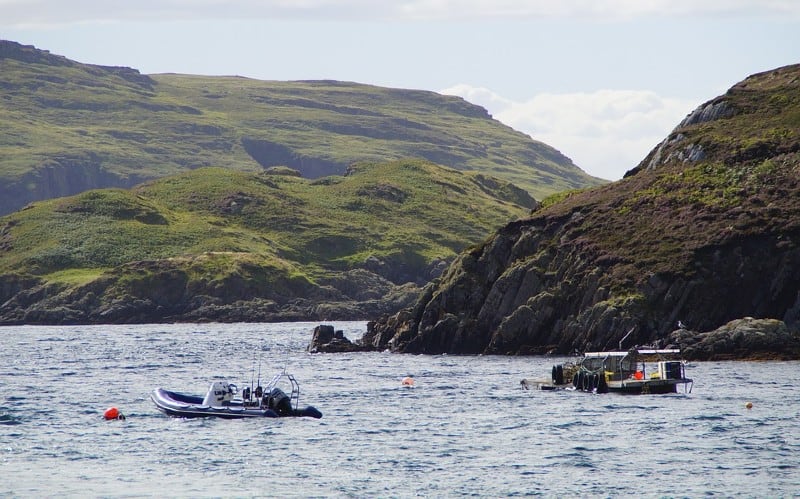
Collisions between boats are all too common. The rules of the road are meant to help lessen these accidents. They can be quite serious resulting in damage, injury, and even death.
Speed is a major factor in collision avoidance. Just like in cars, reduced speed equals reduced chance of collision. You should be familiar with all the rules of the road to help you understand how to avoid a collision. There are some that are more relevant than others.
Rule 2: Due regard shall be given to all dangers of navigation and collision. This rule allows the boater to depart from the rules as necessary. That means to avoid the immediate danger of collision. Your duty above all else is to avoid collisions. That means if you have the right of way and another boat is not respecting that, give way.
Rule 4: Every vessel shall at all times maintain a proper lookout using sight and hearing. As well as by all available means appropriate in the prevailing circumstances. This is to make a full appraisal of the situation and of the possible risk of collision. You need to be aware at all times of what is going on around you.
Rules 6: Every vessel shall at all times proceed at a safe speed. The speed should allow so that she can take proper and effective action to avoid collision. And be stopped within a distance appropriate to the prevailing circumstances and conditions. That means the following needs to be considered:
- Visibility
- Traffic density
- Maneuverability of the vessel with special reference to stopping distance and turning ability
- Background light such as from shore lights at night
- The state of the wind, sea and current
- Proximity of navigational hazards
- The draft in relation to the available depth of water
Rule 7: Every vessel shall use all available means to determine if risk of collision exists. If there is any doubt, assume that it does exist. Risk of collision shall be deemed to exist if the compass bearing from your vessel to an approaching vessel does not change. Constant bearing decreasing range (CBDR) is the term we use to describe this situation.
This is very similar to rule two in that it is on your to avoid collision. Never assume the other boat is going to avoid you. You must avoid them also.
Rule 14: Head-On Situation. If you are in a vessel that is approaching another head-on you shall alter course. Head to starboard so you each will pass port to port. You should give the sound signal of one short blast to indicate that this is your intention as well.
There may be times when this is not possible. Perhaps an obstruction or other such issue. If that is the case you can pass starboard to starboard. Signal your intent to do so with two short blasts. Wait for the other vessel to return the signal. This means they understand.
Rule 15 : Crossing Situation. This applies When two power driven vessels are crossing. To avoid risk of collision, the vessel which has the other vessel on her starboard side shall keep out of the way.
Sailing Vessels or Vessels With Paddles

Vessels not under power have the right of way over those that do. It is analogous to how pedestrians have the right of way over cars on the road. The only time this is not true is if the sailing vessel is passing a power driven vessel. In that case, it becomes the give way vessel.
Navigating Narrow Channels
The rules of the road state you need to stick to starboard in narrow channels. Avoid vessels constrained by draft. Never anchor in a channel unless you have no choice.
Through the Great Lakes and Western rivers, downbound vessels have the right of way. That means vessels going with the current. This is because it is easier for the upstream vessel to maneuver.
Sound one prolonged blast if you are approaching a blind bend. If another boat answers then proceed based on the above navigation rules.
Commercial Vessels
You need to do your best to avoid commercial vessels and commercial lanes. You will always need to give way to large shipping vessels. If unavoidable, do your best to get out of the way as soon as possible.
- Cross ship channels at right angles as quickly as possible
- Use light and sound signals so your are seen and heard
- Keep your VHF radio on Channel 16
- Make sure everyone on board has a PFD on.
Using Sound Signals

Part of responsible boat handling is learning sound signals. These are a key aspect of the rules of the road. They alert other boaters to your intentions so they can respond accordingly. Sounds signals are made with a horn or whistle. They consist of one second short blasts and 4-6 second prolonged blasts.
Inland rules and international rules differ on sound signals. Inland rules dictate the sound happens before the maneuver. International rules require the sound as the maneuver happens.
Navigation Signals
One Short Blast: This tells another boat you plan to pass on your port side.
Two Short Blasts: This tells another boat you plan to pass on your starboard side.
Three Short Blasts: Use this signal to tell other vessels you are using astern propulsion or going in reverse.
Warning Signals
One Prolonged Blast: This warns other boats you are approaching. Use this when exiting a slip, or navigating a blind bend.
Five Short Blasts: This can indicate danger to other boats. It can also respond to another boat saying you don’t understand or disagree with their signal. This can warn them of danger as well. For instance, if their maneuver will cause them to run aground.
Restricted Visibility Signals
One Prolonged Blast: This should be repeated every 2 minutes for power-driven vessels. Restricted visibility can be either night or fog.
One Prolonged Blast plus Two Short Blasts: This should be repeated every 2 minutes for sailing vessels.
What is Comdtinst 16672.2 Series?
Comdtinst 16672.2 series refers to the Navigation Rules of the Road, published by the U.S. Coast Guard. That’s the official title of the document and you can request one from the U.S. Government Printing Office. You can also access the U.S. Government Printing Office on their website at www.navcen.uscg.gov.
The Bottom Line
The rules of navigation are key to responsible boating. They are something any responsible boater needs to be familiar with. It is not expected that you will memorize them by any means. However, you should be aware of them.
As simple as some of the rules are they have a purpose. They are meant to keep you safe. The US Coast Guard and others have developed them specifically for this purpose.

Categories: nauticalknowhow







1 Comment
Roscoe White on May 25, 2022
Are there any rules specific to operating astern, a situation which occurs frequently when leaving a dock? For example, if operating astern leaving a dock would boat traffic abaft be required to yield if approaching the port side of the boat operating astern or when approaching the starboard side of the boat operating astern? Or is this all irrelevant because a boat operating astern must always yield the right of way?