Marine Fire Extinguishers and Boat Fires
Amerex Dry Chemical Extinguisher
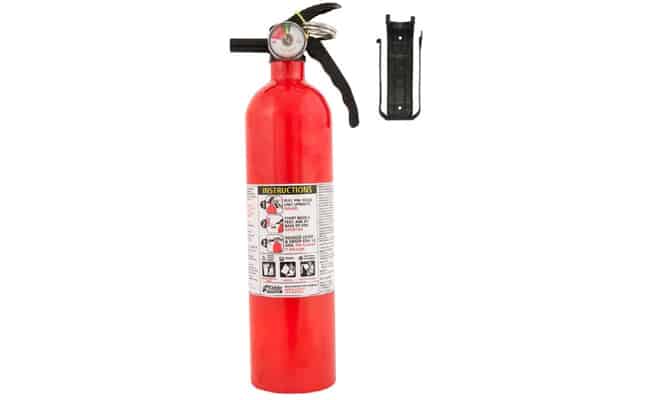
Kidde Multi Purpose Fire Extinguisher
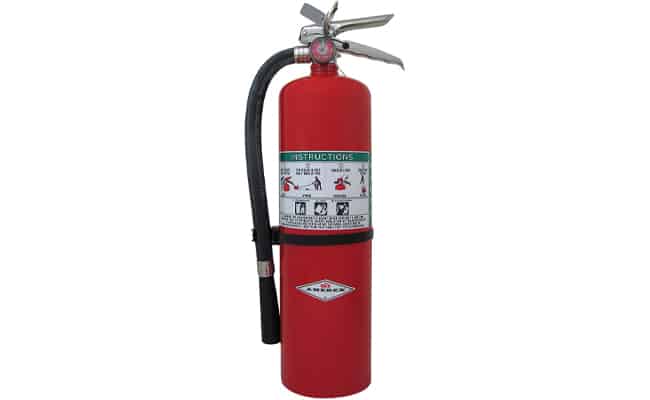
Amerex B456 Dry Chemical Extinguisher
Published by Ian Fortey in nauticalknowhow Last updated on January 2, 2024
A fire extinguisher should be one of the staple pieces of safety gear on any boat. Along with personal flotation devices, this is a must-have item. Fires are devastating on land but can be even worse at sea.
Let’s look at some fire types and why marine fire extinguishers are essential. And finally, here are some safety tips for a boater dealing with marine fires.
Types of Fires
Some boaters may question the importance of a marine fire extinguisher. After all, you’re surrounded by water. How bad could it be? That’s a dangerous line of thinking and can make a fire go from bad to worse. Having a fire extinguisher as part of emergency preparedness would be best. Consider it as vital as a first aid kit.
Not every fire is the same; not every fire can be extinguished with water, especially on a boat.
There are four different classes of fire: Class A, Class B, Class C, and Class D.
Class A Fires: Class A fires burn combustibles like wood and paper. This kind of fire can be put out with water and fire extinguishers. The best types will use foam or dry chemicals to smother the fire.
Class B Fires: These are fires caused by flammable liquids. Gasoline fire is a Type B. This is not the kind of fire you want to extinguish with water. Throwing water on a fire caused by burning gas or oil will make the liquid spread. A small fire could become out of control with the addition of water.
The proper fire extinguisher for this may be foam or dry chemical. Carbon dioxide is also used. Carbon dioxide robs the fire of oxygen, forcing it to die. Remember, however, to cut the fuel supply. If a gas line burns, it will continue to burn until you miss the fuel supply. That alone may stop the fire.
Combination A and B Fires: Gasoline can start wood to burn, for example. That leads to a mix of fires and fuels. Foam extinguishers or carbon dioxide can also help here. Remember to be cautious using carbon dioxide. In enclosed spaces like the engine compartment, this could cause you to pass out,
Class C Fires: These are electrical fires. Poor wiring on a boat could lead to a class C fire. Like Class B, you do not want to put water on this. Since water conducts electricity, you risk death or injury from shock if you do so.
It would be best to have a non-conducting extinguishing agent for an electrical fire. CO2 may again be used. Or a chemical extinguisher like Halon. Cutting the circuit will be critical to controlling these fires. Foam is not to be used on electrical fires.
Combination A and C Fires: These are handled much the same as a C alone. Dry chemical extinguishers are best.
Class D Fires: These fires are caused by reactive metals like magnesium. Most boaters deal with ABC fires. D is likely the rare type of fire on a boat. Also, water would make this type of fire worse as well.
As you can see, three of the four fire types are more dangerous when water is added. That is why a proper marine fire extinguisher is essential.
Choosing the Right Marine Fire Extinguisher
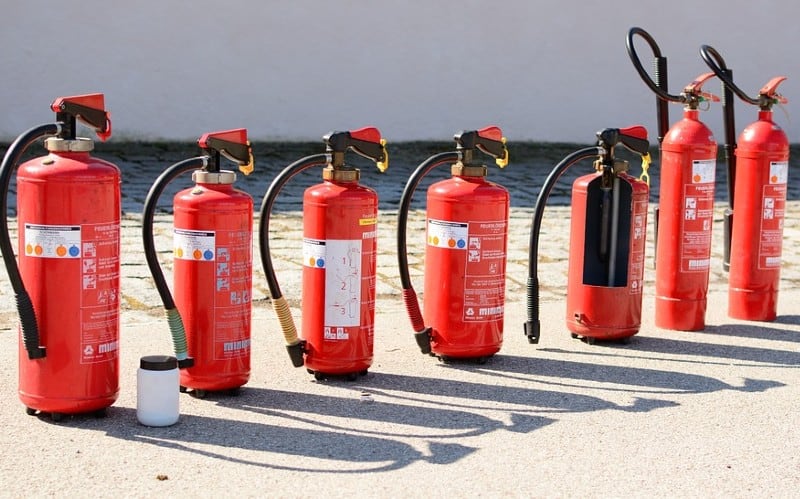
The US Coast Guard has guidelines for choosing a fire extinguisher. You want one that meets their specifications. It needs to have either B-I or B-II classification. To meet specs, an extinguisher has to offer the following:
- Minimums of a 5 B: C U/L rating
- 2lbs. of dry chemical
- 2. lbs. of Halon
- or 5 lbs. of CO2
This is because of the different types of fires that can occur on a boat. As we have seen, not every extinguisher will work on every kind of fire.
- A powerboat less than 26 feet, except outboards, must have one B I extinguisher on board.
- Boats 26 feet to 40 feet must have two B I extinguishers or one B II.
- 40 feet to less than 65 feet must have 3 B I, or one B I and one B II
- Over 65 feet must follow federal guidelines.
Extinguisher Types
ABC Extinguishers: The most thorough extinguisher you can get covers ABC fires. You can buy Halon and dry chemical extinguishers that are ABC-ready. These typically cost between $60 and $120. It depends on the exact kind and where you buy it.
ABC dry chemicals are not recommended for boat use. That’s because they are corrosive. Also, they work by melting and encasing as part of their Class A rating. This can cause severe damage to your boat.
AB Extinguishers: These are typically foam fire extinguishers. Because they are water-based, they can handle A fires. B fires are also contained. They should not be used on C fires.
BC Extinguishers: Most CO2 extinguishers can handle B and C fires. These are not recommended for Class A fires due to pressure. The gas under pressure risks spreading a Class A fire further. There are also dry chemical BC extinguishers.
How to Handle a Fire on a Boat
A fire needs three things to thrive – Fuel, Oxygen, and Heat. Remove one, and the fire dies. Fuel buildup in a bilge will readily mix with oxygen. A spark is all that is needed to ignite it, providing all three elements.
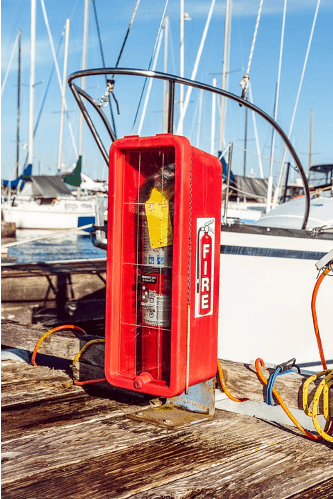
Make sure your fire extinguishers are easy to find. They must also be up to date and charged. Replace them any time you use them. Take the time to learn how to use them as well. Please make sure the crew and passengers know where they are. Don’t hesitate, and stay safe.
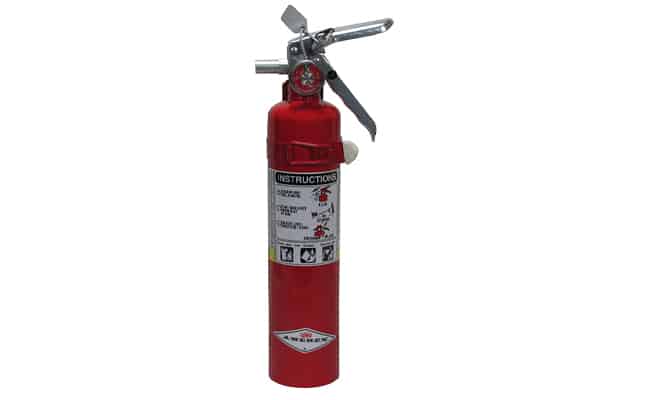
Amerex Dry Chemical Extinguisher
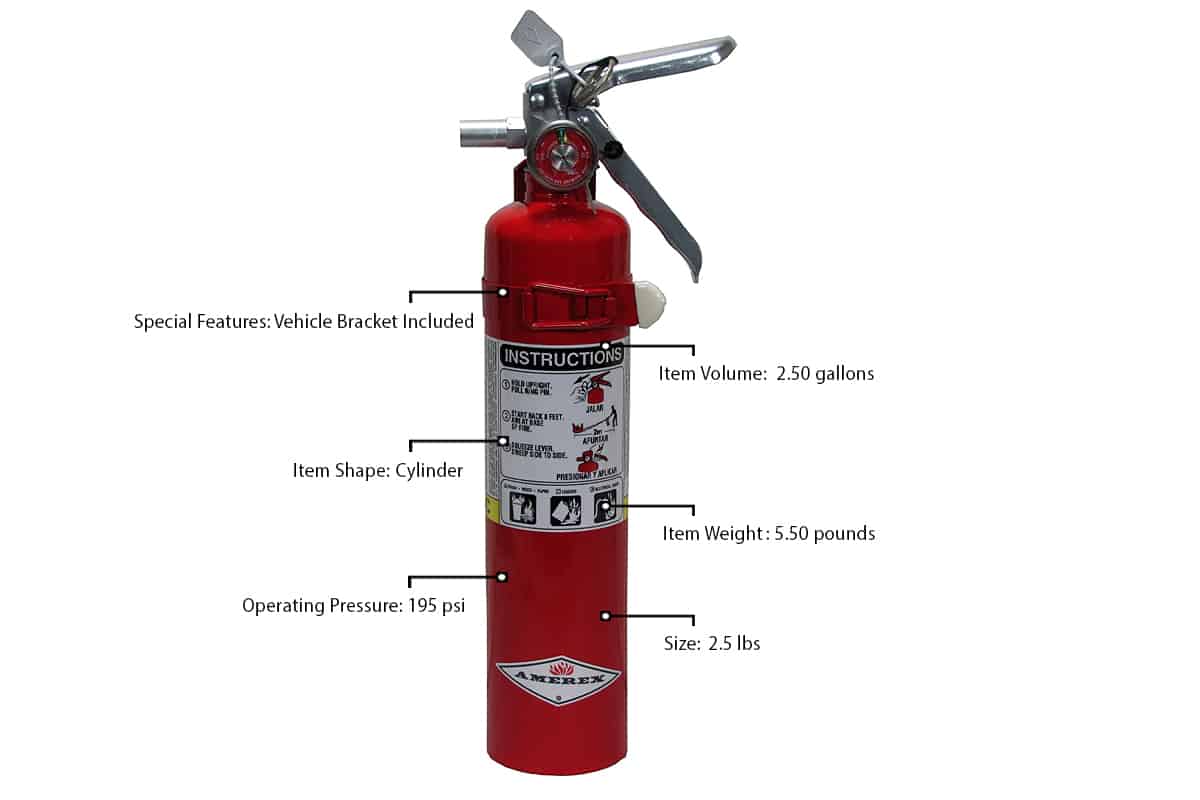
All the features you’re looking for in an extinguisher can be found in this model. It’s a good price, it’s compact, it meets all Coast Guard regulations, and it’s effective. Overall you probably won’t find a better fire extinguisher at this size.
Unlike some this isn’t a cheap plastic model. It comes with a USCG-approved mounting bracket, metal valve and pin, and easy-to-read display gauge. This may not be suited to handle a massive blaze on a larger boat, but that is not the intent, either. For most boaters, this will handle their needs well and give you that peace of mind you want.
Kidde Multi Purpose Fire Extinguisher
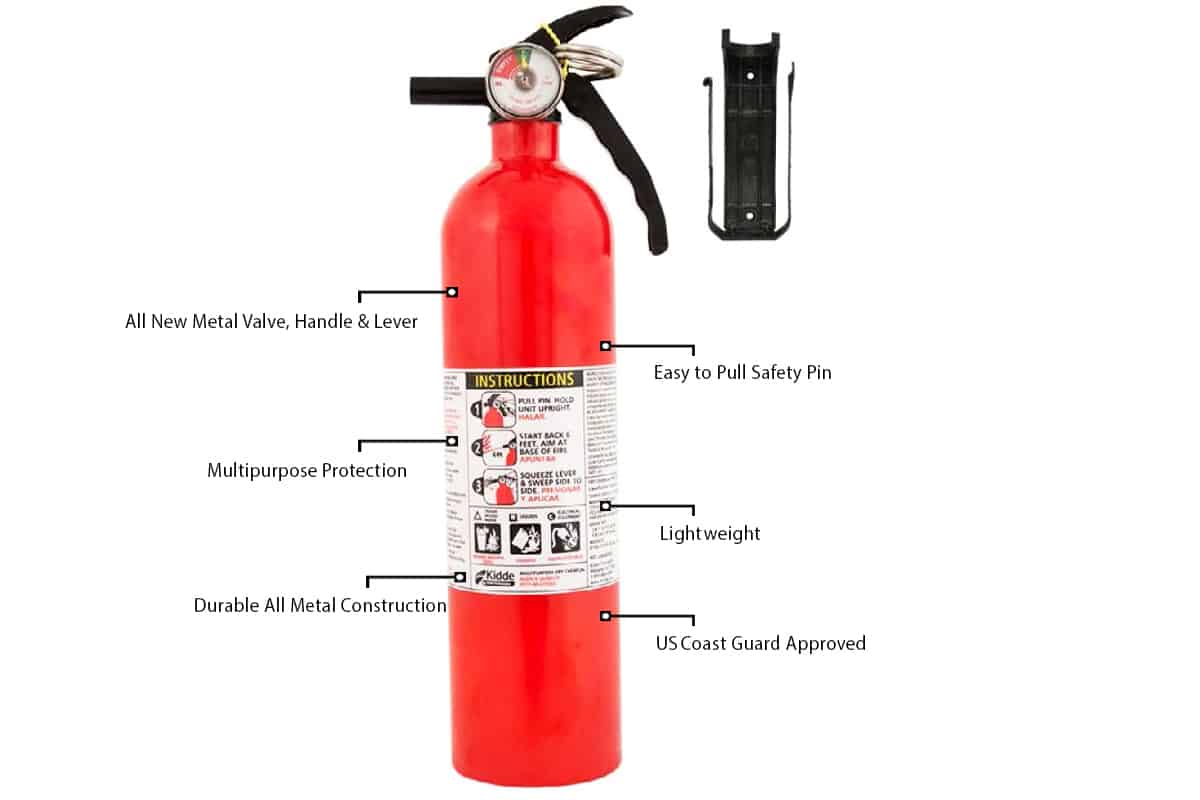
US Coast Guard approved, light and compact, the Kidde Multi-Purpose fire extinguisher is a great option for any boat. If you don’t want the added work of a rechargeable extinguisher, this affordable option is UL rated 1-A:10-B:C.
Because it’s a disposable unit, it’s not going to set you back as much as some of the other options out there. But it offers the same protection and power as those other extinguishers. If you have a small boat with limited space, or you don’t want to break the bank right now, consider the Kidde multi-purpose.
Amerex B456 Dry Chemical Extinguisher
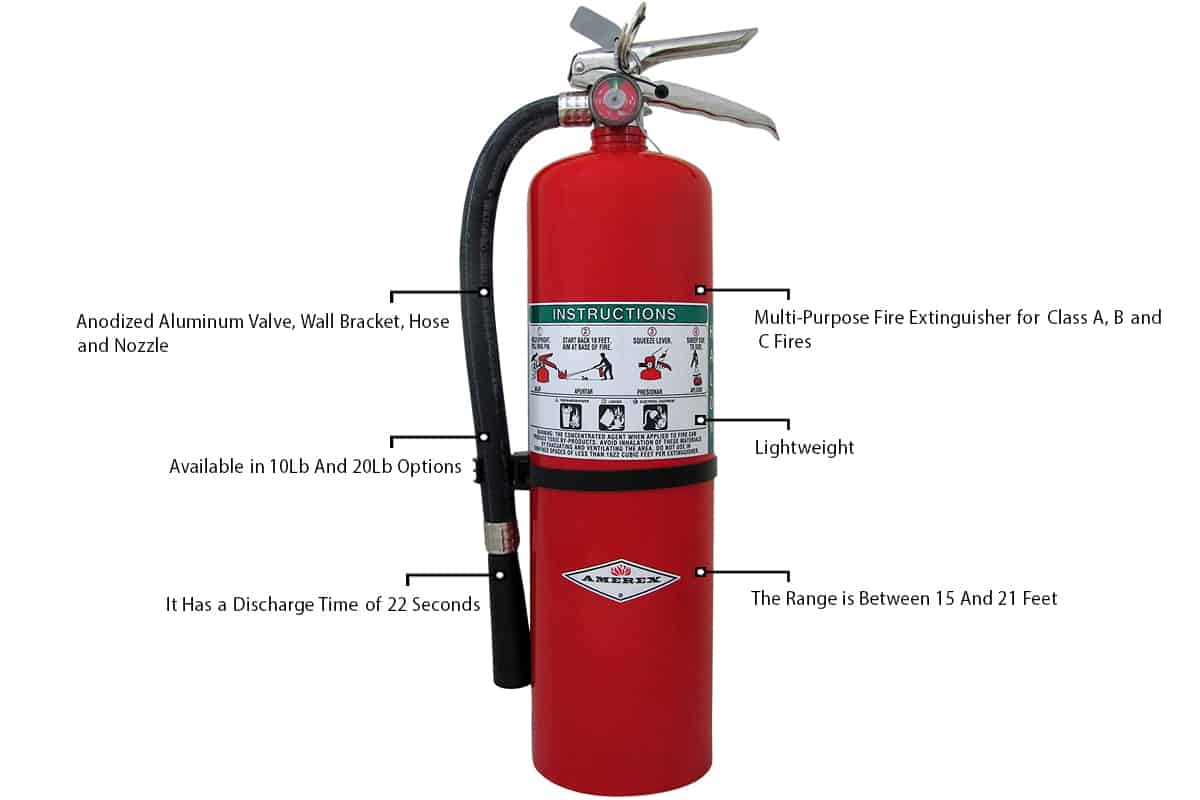
When a smaller extinguisher won’t get the job done, the Amerex B456 is what you need. Available in 10lb and 20lb options, this is designed for bigger boats and/or larger fires. You won’t have to worry about running out of dry chemical with this model.
It features the 20-B / B-II compliance text on the UL Label and is suitable for something like home or RV use as well. The range is between 15 and 21 feet and it has a discharge time of 22 seconds. Combine this with the fact the Amerex brand has long been a reliable name for marine fire extinguishers and this is a solid choice.

Categories: nauticalknowhow